Map the perimeter and traffic interactions
- Identify every crossing with lift routes, loading docks, and public edges. In dense mixed-use work, tight setbacks may require shorter panels or alternate gate placement.
- Note ground slope and drainage paths so fence lines don’t dam water during heavy showers.
Surface and site-stability planning considerations
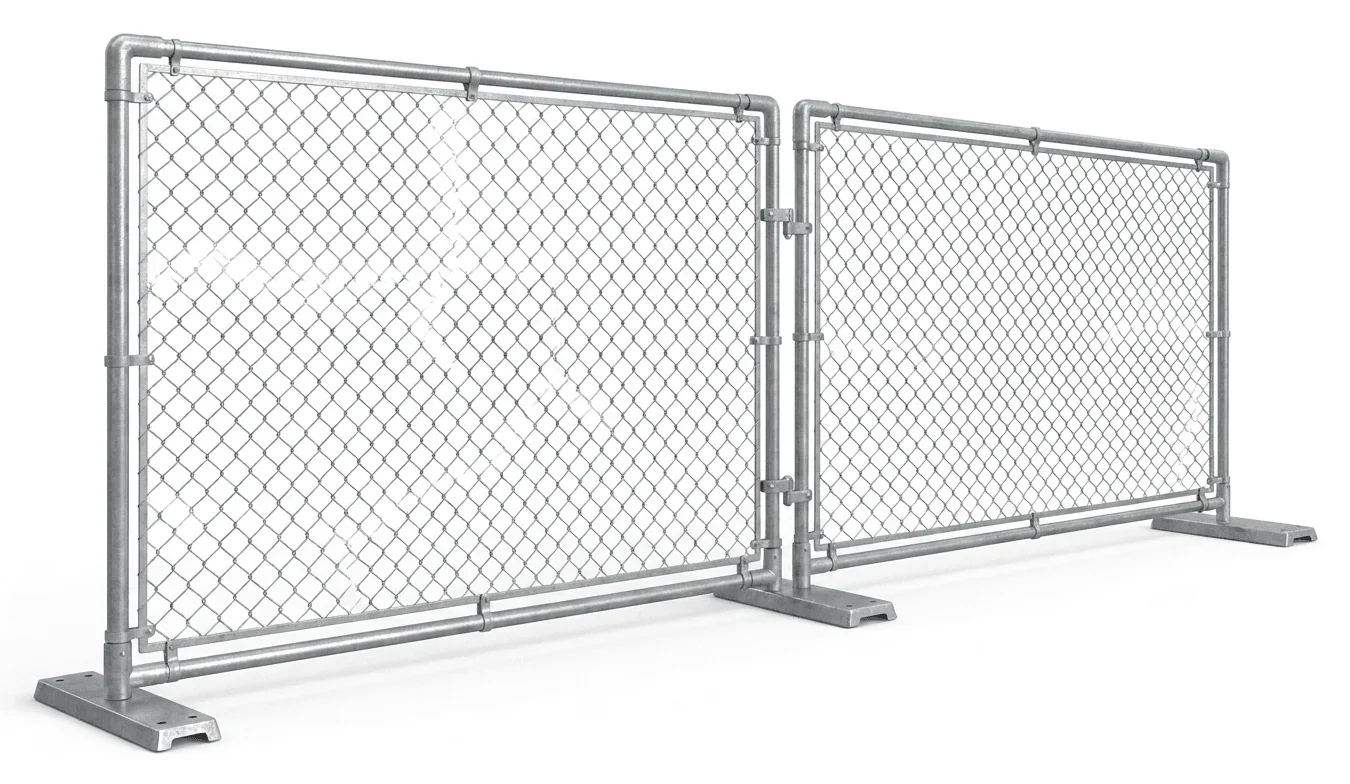
- Sandy or recently graded surfaces reduce holding strength for stands and bases. Wider bases and site-stability factors planning help maintain panel plumb on uneven terrain.
- Coastal humidity can accelerate wear on clamps and couplers. Corrosion-resistant hardware maintains connection strength over longer durations.
Gates, barricades, and sightlines
- Gate width should match the largest planned load, including boom or telehandler attachments. See /telehandler-rental/ and /boom-lift-rental/ for typical widths and turning clearances.
- In high-traffic logistics areas, use barricade layouts that preserve sightlines at drive entries and staging lanes.
Adjacent elevated work
Where facade or canopy tasks are underway, keep fence offsets that allow scissor or mast lifts to operate without swinging into panel lines. Related categories: /electric-scissor-lift-rental/ and /vertical-mast-lift-rental/.
Seasonal resilience
Frequent rainfall can undermine bases and shift site-stability factors. Periodic checks after storms keep runs aligned and gates functional. Hardware choices that resist salt exposure reduce mid-project adjustments.